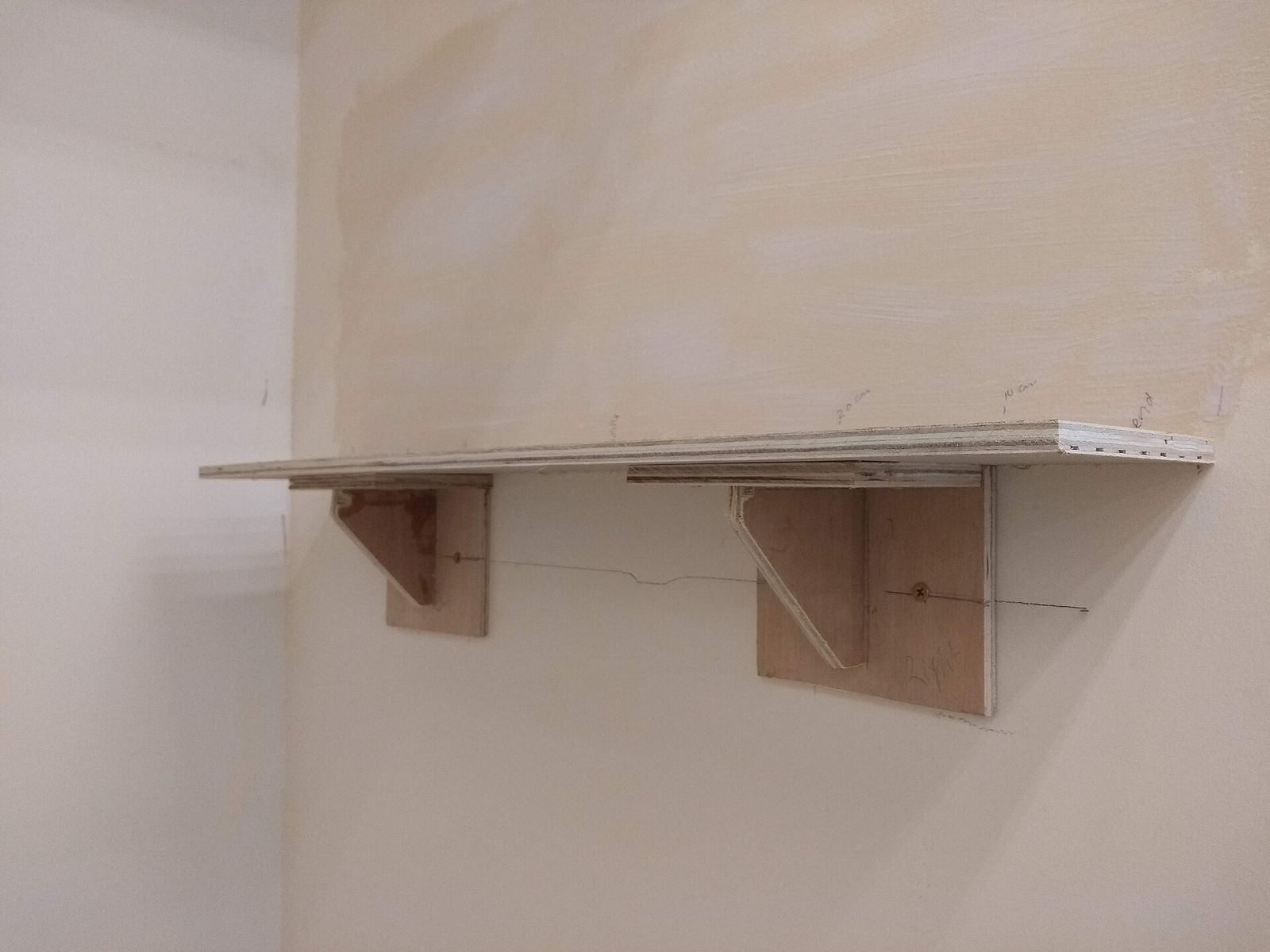
On this page
A shelf fails in one of two ways. Either the fixing pulls out of the wall, bringing the plaster with it, or the bracket bends and the load tips forward. Both come down to the same mistake: the fixing was never matched to the wall or the weight it had to carry. This guide covers finding the solid parts of a wall, picking the right fixing, and loading the shelf so it stays put.
Know what your wall is made of
Work out what you are drilling into first, because the wall decides the fixing. Most interior walls in newer homes are drywall, plasterboard screwed to a frame of wooden or metal studs. Older homes often have plaster over wooden lath, which is harder and more brittle. Some walls, especially in basements and garages, are solid masonry: brick, concrete or block.
Tap the wall with a knuckle. A drywall or lath wall sounds hollow between the solid points and dull where there is framing behind. If the whole wall sounds solid and a pushpin will not go in by hand, treat it as masonry.
Find the studs
On a hollow wall, the strongest fixing by far is a screw driven into a stud. Studs usually sit 16 inches apart from centre to centre, though 24 inches is also common, so once you find one you can measure along to the next. An electronic stud finder is easiest: slide it across, mark each edge, then aim for the middle. Without one, knock along the wall and listen for the hollow sound turning solid.
- Mark both edges of each stud, then drill into the centre of the solid span.
- Confirm a suspected stud with a fine bradawl pushed through the plaster; it should hit wood within an inch.
- If your brackets do not line up with studs, reposition the shelf or use proper hollow-wall anchors instead.
Check for pipes and wires first
Electrical cables and water pipes often run vertically above and below sockets and switches, and horizontally near them. Drilling into either is dangerous and expensive. Before any hole, use a combined detector that finds live wires and metal, and keep clear of the zones around any outlet or switch. If in doubt, stop and ask an electrician or plumber.
Match the anchor to the wall and the load
When you cannot hit a stud, the fixing does all the work. The wrong anchor in the wrong wall feels secure until it lets go, which is worse than no anchor. Always read the weight rating on the packet and treat it as a maximum under ideal conditions, not a target.
| Wall type | Best fixing | Why |
|---|---|---|
| Any wall, into a stud | Wood screw into the stud | The frame carries the load directly. Strongest option, no anchor needed. |
| Drywall, no stud | Toggle bolt or heavy-duty anchor | The toggle opens behind the board and spreads the load over a wide area. |
| Plaster and lath | Toggle bolt into a cavity | Old plaster is brittle; a toggle avoids crushing it the way an expanding plug can. |
| Brick or concrete | Masonry anchor or wall plug | The anchor grips the solid material as it expands inside the hole. |
Toggle bolts suit hollow walls because the wings open behind the plasterboard and share the pull across a large patch. Masonry anchors swell inside a snug hole as you drive the screw, so they need a hammer drill and a bit sized to the plug. Fix every bracket, not only the two at the ends.
What you need
Hang the shelf
Mark and level the bracket line
Hold the brackets at the height you want, rest the spirit level on top, and adjust until the bubble is centred. Mark each fixing hole with a pencil.
Scan before you drill
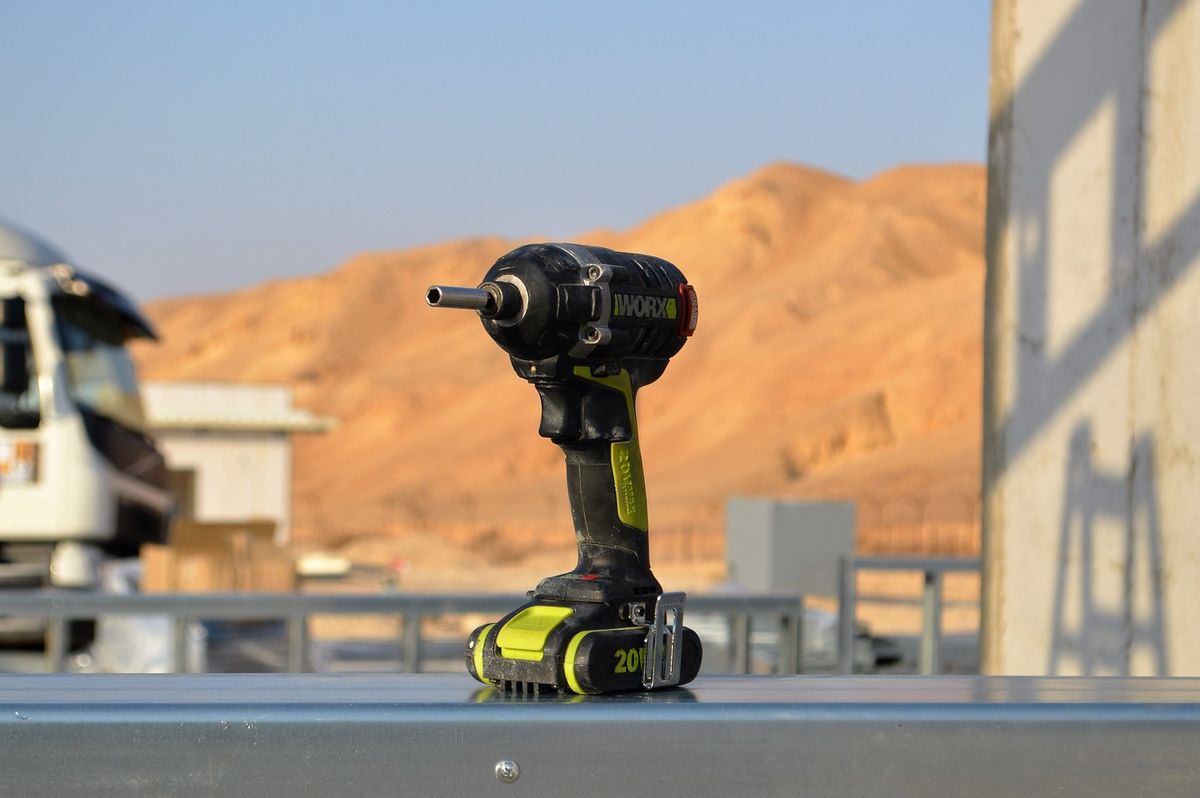
Run the detector over every marked hole for wires and pipes. If anything shows up, shift the shelf and re-mark. Only drill a clear hole.
Pre-drill the holes
Use a bit slightly smaller than the screw for a stud, or sized to the anchor for a hollow or masonry wall. This stops the plaster cracking.
Fit the fixings and brackets
Push toggles or plugs fully in, then drive the screws until the bracket sits flush and firm. Do not overtighten into drywall, which can strip the hole.
Load it gradually and check
Add weight gradually, watching for sag or movement, and keep heavier items near the bracket ends.
Do not push the limit
The weight rating on an anchor or bracket is a lab ceiling, so stay well under it. Books and loaded boxes are heavier than they look, and the load is rarely still. For something genuinely heavy, hit a stud, use more brackets than you think you need, and keep the shelf short; a long span sags in the middle no matter how good the fixings are.
Photo credits
- Photo: Cupofjoy / Wikimedia Commons, CC0
- Photo: Russ / Wikimedia Commons, CC BY 2.0
Written and edited by EasyGuides Editors. See our editorial standards.